A Must-Read for American Immigrant Families! Latest Rankings Related to Children's Education
At the beginning of 2026, the first major ranking in the global higher education field has been released. Times Higher Education (THE) has officially unveiled the 2026 World University Subject Rankings! American higher education institutions have once again demonstrated strong capabilities.

• Massachusetts Institute of Technology has successfully ranked in the top three in the world in 3 out of 11 subject rankings.
• Stanford University ranks TOP1 in the fields of education and law.
• California Institute of Technology leads the field of science subjects, ranking first in the world.
• Stanford University, Harvard University, and the University of Cambridge have all ranked in the top ten globally across all 11 subject rankings.
• The United States dominates the top 10 lists of 11 subjects.
• Whether in the overall subject rankings or the top 50 of each subject, the United States ranks first among countries/regions.

Ranking Subjects and Methodology
This ranking includes 11 subjects: Arts and Humanities, Business and Economics, Medicine and Health (formerly Clinical and Health), Computer Science, Education, Engineering, Law, Life Sciences, Physical Sciences, Psychology, and Social Sciences.
The ranking indicators use the same 18 performance indicators as the 2026 Times World University Rankings, summarizing scores in the categories of teaching, research environment, research quality, international outlook, and industry.
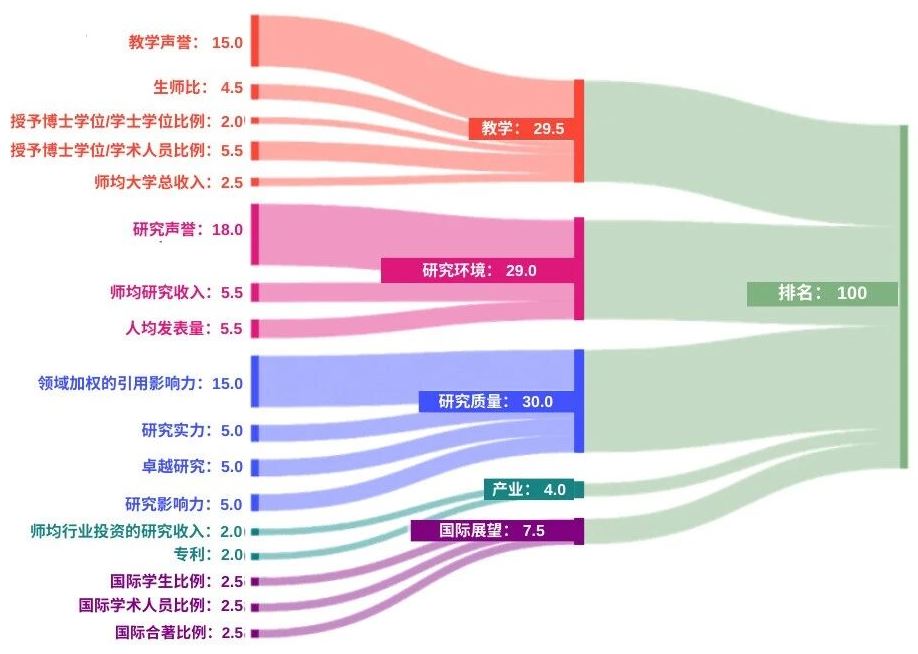
Additionally, the Times Higher Education Subject Rankings set two major standard thresholds: subject publication volume and minimum number of academic staff.
From the Times Higher Education (THE) 2026 World University Subject Rankings, it is clear that American universities continue to maintain a global leading position in multiple subject areas. American higher education has always been globally attractive not only at the academic level but also provides students with broader development opportunities in terms of advancement paths, research resources, and social mobility.
However, when families truly shift their focus from "school rankings" to specific advancement paths and long-term planning, a realistic and critical variable begins to emerge—identity.
When Education Enters the "Critical Stage"
Identity Becomes the Core Variable
The reality is very clear: there are significant differences between international and domestic students in terms of admission rates, major choices, and tuition costs. Many families do not lose due to ability but due to the institutional barriers brought by identity.
Therefore, when families truly begin to make medium- to long-term plans for their children's education, identity is no longer an "additional item" but a "fundamental item."
Why More and More Families
View EB-5 as an "Educational Identity Configuration"
Among all legal immigration paths to the United States, the EB-5 investment immigration is not long-term favored by high-net-worth families because it is "fast" or "simple," but because its logic is very clear:
• Directly solves identity issues
• Children can enjoy the local education system and advancement channels
• Not tied to an employer, not subject to occupational restrictions
• Clear path to obtaining identity, mature legal framework
In short, world university rankings look at schools; what truly determines educational outcomes is often identity. For families whose core demands are children's education and long-term family planning, EB-5 is a forward-looking strategic identity configuration.
Worldway holds two high-quality EB-5 rural projects to help investors achieve American identity planning steadily, without waiting periods, and efficiently, quickly embarking on a new life in the United States. Global quotas are limited, seats are scarce, first come, first served!
Additionally, the Trump Gold Card immigration project is officially open for applications, and Worldway has taken the lead in launching Gold Card acceptance services to help applicants efficiently advance the application process and seize the critical time window.