New EB-5 Immigration Visa Issuance Data Released!
After being dormant for 8 months, the U.S. Department of State's monthly immigration visa issuance data finally saw an update in early March 2026. The official monthly immigration visa statistics page released data from June, July, and August 2025 all at once.
This update is very clear in its significance to the market. Not only does it enable everyone to see the latest visa issuance rhythm for Chinese applicants, but it also further confirms an increasingly clear trend: Under the EB-5 new legal framework, the advantages of rural projects are gradually being reflected in actual approvals and visa issuance results.
Let's take a closer look at the key signals released by this set of data with the WorldTrade Group.
Mainland China-born Applicants
EB-5 Reserved Visa Issuance for June-August
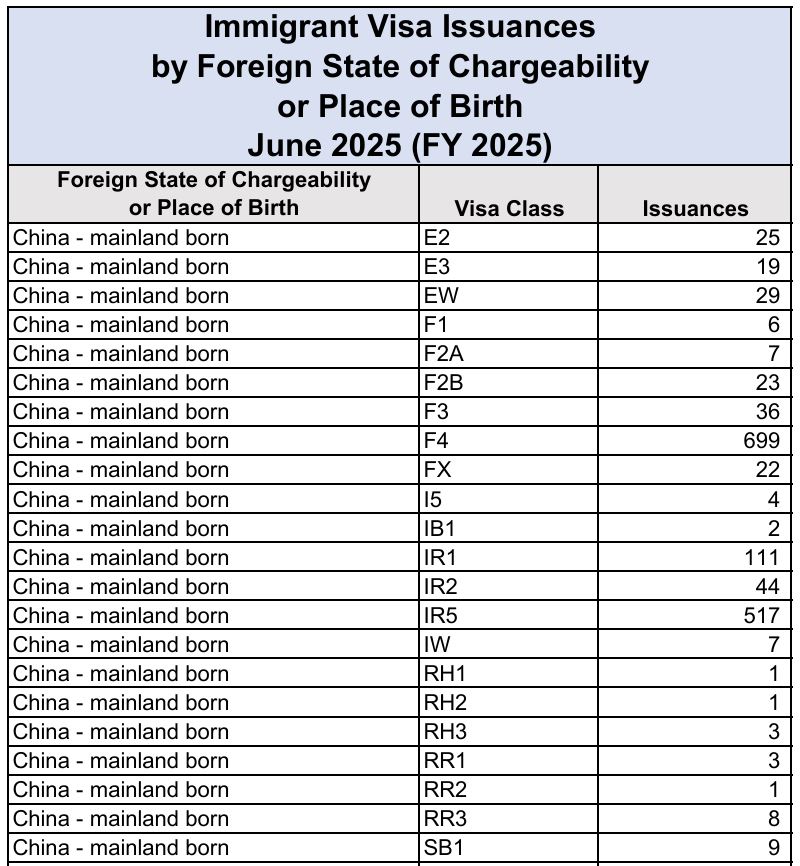
Visa Issuance Data for Chinese Applicants in June
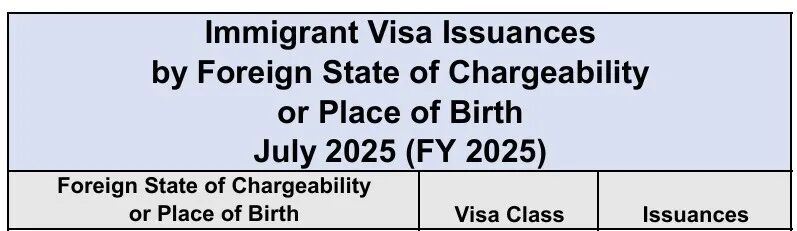
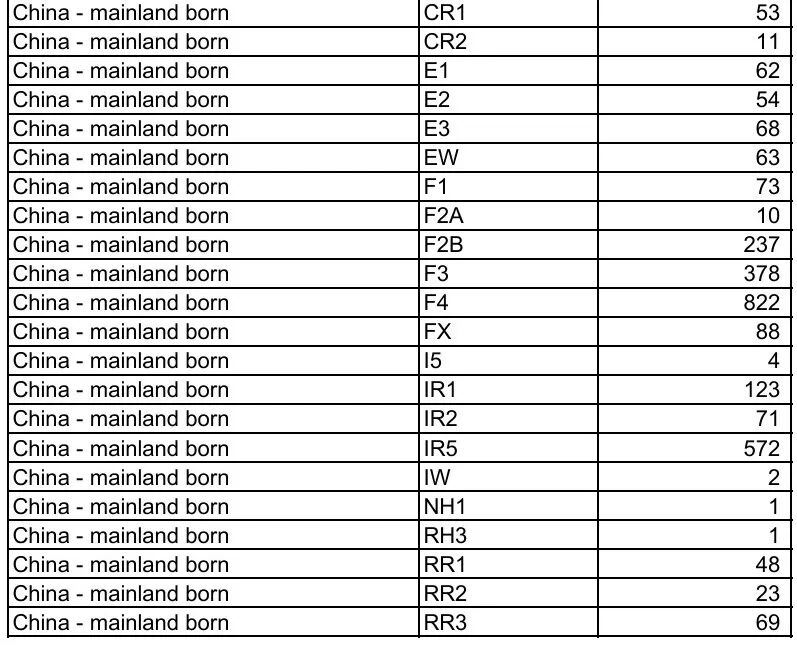
Visa Issuance Data for Chinese Applicants in July
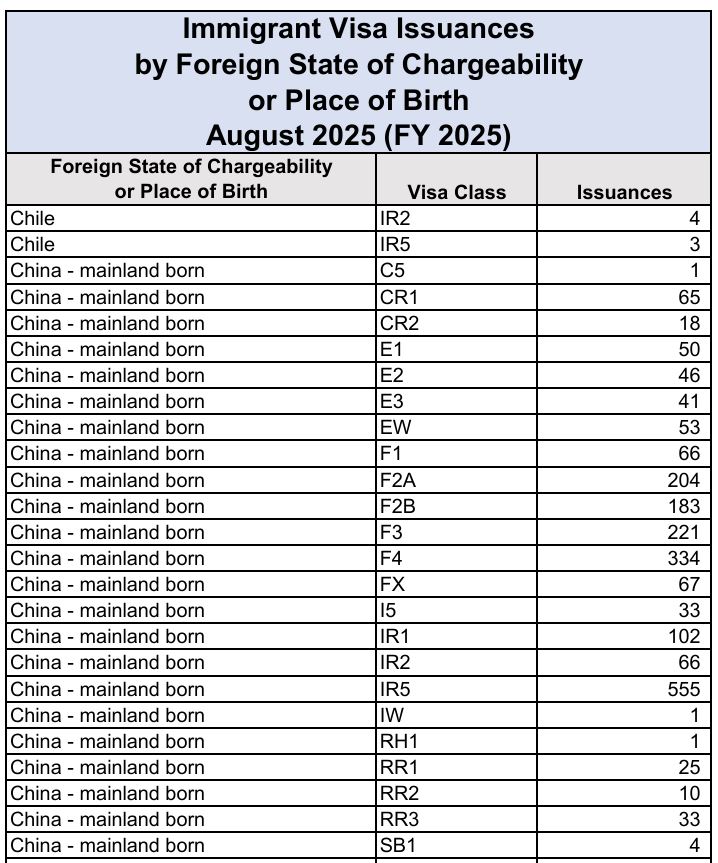
Visa Issuance Data for Chinese Applicants in August
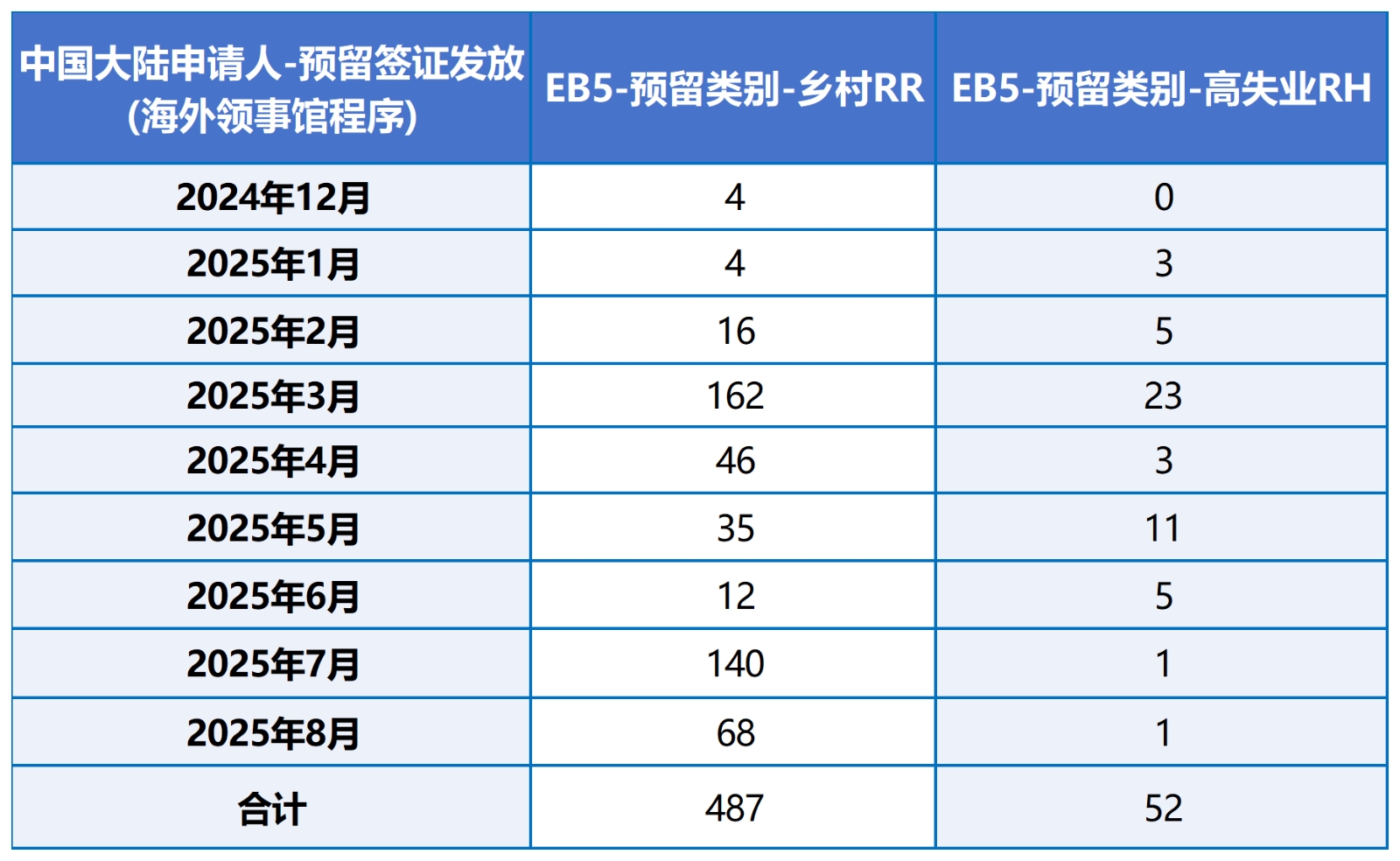
According to the data, for June, July, and August 2025, the number of EB-5 reserved visas issued to mainland China-born applicants were:
• RH (EB-5 Regional Center Reserved Visa - Urban High Unemployment Area Projects): 5, 1, 1
• RR (EB-5 Regional Center Reserved Visa - Rural Projects): 12, 140, 68
The comparison shows that rural projects are clearly leading both in total issuance quantity and in phased issuance performance compared to urban high unemployment area projects. Urban high unemployment area projects consistently maintained a low level of activity over these three months, remaining in a relatively 'silent' state.
Moreover, as of August 2025, through overseas consulate procedures, a total of 539 EB-5 reserved visas have been issued to mainland China-born applicants, with 487 going to rural projects and 52 to urban high unemployment area projects.
Global Data:
EB-5 Reserved Visa Issuance Status
As of August 2025, the global situation for EB-5 reserved visa issuance is as follows:
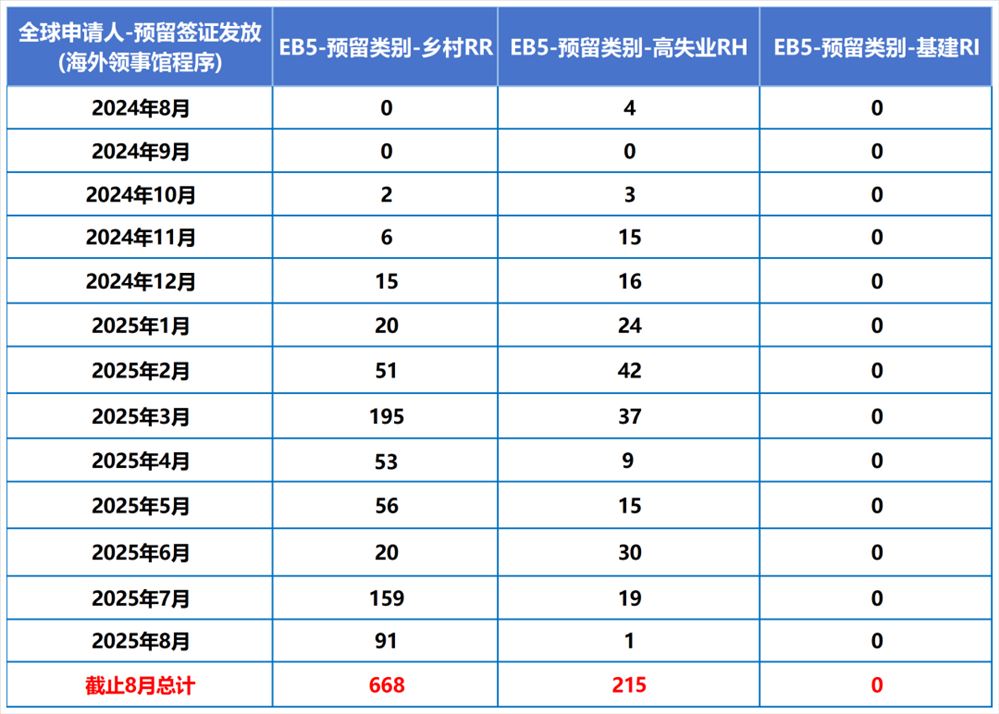
According to the data, the global issuance status of EB-5 reserved visas for June, July, and August 2025 are:
• RH (EB-5 Regional Center Reserved Visa - High Unemployment Projects): 30, 19, 1
• RR (EB-5 Regional Center Reserved Visa - Rural Projects): 20, 159, 91
As of August 2025, a total of 883 reserved visas have been issued globally, with 668 for rural projects and 215 for urban high unemployment area projects. Of these 883 reserved visas, mainland China-born applicants received a total of 539, accounting for a significant share of 61%.
Conclusions Behind the Data:
Rural projects, once ahead, always ahead
From the issuance situation for Chinese applicants to the overall data of global reserved visas, it all repeatedly demonstrates:
Firstly, 'priority processing' for rural projects under the new law is not just empty talk.
Secondly, rural projects not only have advantages for Chinese applicants but also show stronger issuance momentum globally.
Thirdly, mainland China applicants hold a very significant position in the EB-5 reserved visa category.
Fourthly, the current EB-5 reserved category, especially rural projects, remains one of the primary tracks that Chinese applicants should particularly focus on.
Ultimately, the lead of rural projects is not accidental; it is formed by the combined effects of priority approval and visa issuance advantages. This lead has recently been reconfirmed by the latest U.S. immigration bureau's adjudication rules. Starting March 30, 2026, the Bureau will generally adopt the 'first in, first out' (FIFO) principle for allocating the adjudication order for I-526/I-526E applications and will prioritize the adjudication of rural projects.
For EB-5 applicants, this lead means that once they enter the rural project track, they will have more opportunities to take the initiative in subsequent processes such as adjudication, visa issuance, and residency landing.
Moreover, in terms of actual handling results, WorldTrade Group has already seen several successful cases from EB-5 investors choosing rural projects, covering critical nodes such as I-526E approval, receipt of interview notification, successful interview, obtaining immigration visas, and eventually receiving green cards. This is also the real proof of the continual realization of the priority approval advantages of rural projects.