From H-1B to Forced Departure: How to Solve the Dilemma of Staying in the US?
Recently, it was reported that Meta is planning a new round of large-scale layoffs, affecting up to 20% or more of the total number of employees. Based on the latest disclosed global employee count of 79,000, nearly 16,000 positions are at risk of being laid off. This news quickly triggered market turbulence.
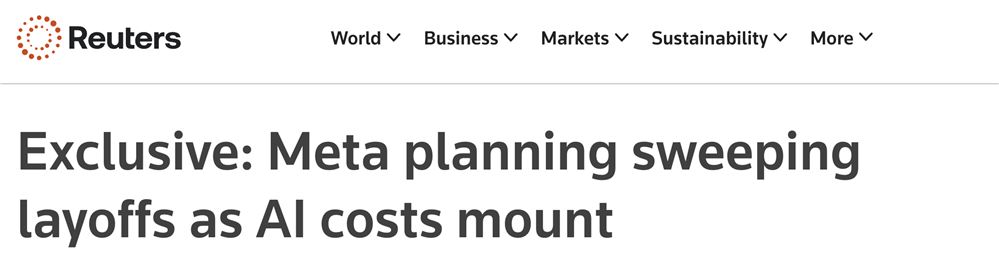
It reminds many young people preparing to develop in the United States: the employment environment in the US today is tightening significantly. Especially for international students, the truly daunting aspect behind layoffs is not merely the potential loss of jobs but the disruption of the pathway to staying in the US.
Meta's layoffs are not an isolated incident
The reason this news is particularly painful for the market is that Meta's personnel reduction has long had signs. In November 2022, Meta announced layoffs of about 11,000 people; in March 2023, the company announced another round affecting around 10,000 people, with both rounds impacting over 20,000 people cumulatively.
Meta is not an isolated case. In recent years, from large tech companies to other leading enterprises, news of layoffs, job cuts, and team compression has been emerging in the market.
Meanwhile, data from the New York Fed shows that by the fourth quarter of 2025, the unemployment rate for new college graduates in the US has risen to about 5.7%, and underemployment has risen to 42.5%, reaching a high since 2020. This indicates that the current job market faces not just fewer positions but increased difficulty for young graduates in finding jobs that truly match, are stable, and sustainable.
The passive aspect for international students
is that the traditional pathway to stay in the US is becoming more difficult
For many international students, the conventional pathway for development in the US has been: F-1 to study in the US, then enter the job market through OPT after graduation, strive to be selected for H-1B, and gradually solve long-term residency issues.
In the past, this path was viewed by many as the default option; but now, with job cuts, cautious recruitment, and recurrent layoffs, every part of this path is becoming harder. More realistically, H-1B rules, OPT policies, etc., are tightening.
A path that originally required sequential linking, any issue in a certain part can affect subsequent arrangements entirely. Essentially, the path most relied upon by international students is narrowing.
Once confronted with layoffs
identity risks will immediately amplify
For many local employees in the US facing layoffs, it’s often just a disruption in their career; but for international students, layoffs often immediately touch upon identity issues. H-1B is inherently a job-related status. Once employment ends, applicants usually have up to a 60-day grace period to find a new employer, change status, or arrange departure.
That is to say, for many international students, layoffs are never just about losing a job; it might also mean the forced interruption of plans to stay in the US. Although jobs can be found again, the identity window won’t always wait.
Thus, amidst increasing layoffs, job cuts, and tightened visa pathways, more and more international student families are turning their focus to long-term status plans not reliant on employers.
In the current environment
why EB-5 is worth special attention
For applicants with long-term development needs in the US, in the current environment, EB-5 is one of the status planning paths worth special attention. Its significance lies not only in obtaining US status but in striving for more certainty and autonomy in future education, internships, jobs, and living arrangements.
Especially under the current policy window, rural EB-5 offers advantages such as exemption from waiting periods, dual submissions, priority reviews, and can help applicants secure status planning opportunities earlier, leaving more room for future development in the US.