H-1B Breaking Alert! Changes in the Direction of Studying in the U.S.
Recently, many international students have been frequently refreshing the system, waiting for their H-1B lottery results.
The 2027 fiscal year's H-1B registration closed on March 19, and now, some applicants' myUSCIS accounts have begun to show results. Meanwhile, reports suggest that this year’s H-1B registration may have decreased by 30%-50% compared to last year. This reflects not that “people no longer want to stay in the U.S.”, but that the path is becoming increasingly difficult.
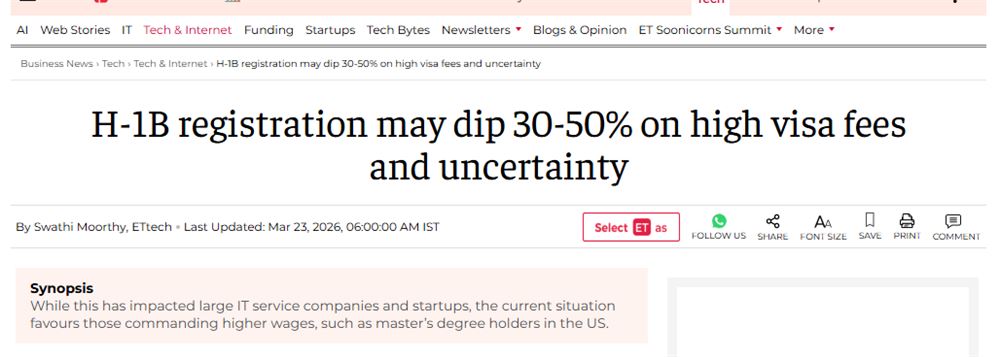
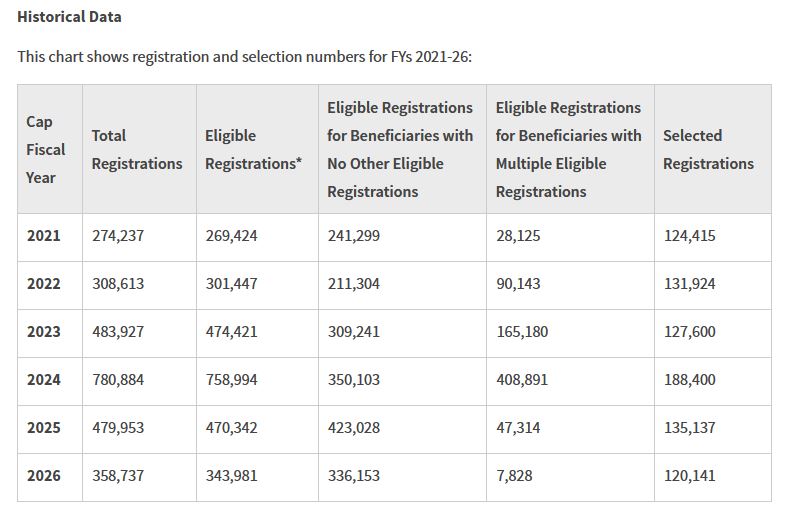
The regular quota for H-1B each year is 65,000 standard slots + 20,000 exclusive slots for a master's degree or higher from the U.S., totaling approximately 85,000, but the number of applicants has consistently exceeded the quota. Even though the registration number for the 2026 fiscal year declined, the situation of hundreds of thousands competing for 85,000 slots remains unchanged.
Many people originally thought that the hardest part of H-1B was “whether you can win the lottery”; but now it is increasingly apparent that even if you win, it might not be secure. Because the logic behind the H-1B selection process in the U.S. has quietly changed: it is no longer just about luck, but increasingly about salary, position, and the strength of the employer.
Yet to receive the lottery results
News of salary threshold hits hard
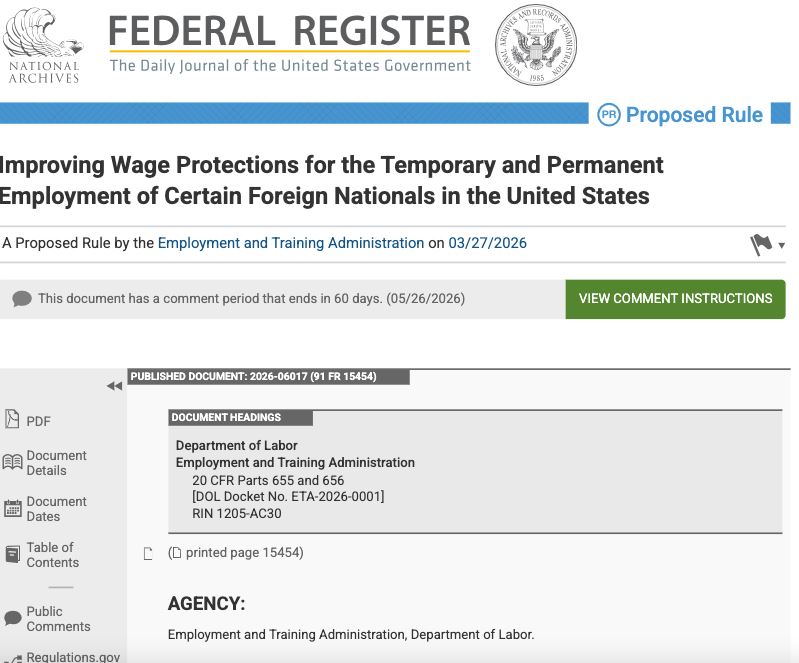
As everyone is focused on the lottery results, the U.S. Department of Labor has thrown out a major proposal: to significantly raise H-1B visa “minimum wage standards” (Prevailing Wage).
According to this proposal, the current four-level wage structure will broadly increase:
• Level 1 (Entry-level): Minimum wage standard will rise from the 17th percentile of industry wages to the 34th percentile
• Level 2 (Junior professional level): Rising from the 34th percentile to the 52nd percentile
• Level 3 (Senior level): Rising from the 50th percentile to the 70th percentile
• Level 4 (Advanced/Expert level): Rising from the 67th percentile to the 88th percentile
The so-called “percentiles” can be understood as the position within the salary for the same role; the higher the number, the higher the salary requirement.
In simple terms: in future, employers wanting to sponsor H-1B for foreign employees might have to offer higher salaries. Positions that were barely manageable before may no longer be affordable; companies that supported international students might be more hesitant; applications that once said, “let’s give it a try”, might be blocked internally within the company in the future.
The more noteworthy point is that the Department of Labor itself estimated in the document: if adjusted according to this proposal, the average certified wage might increase by roughly 14,000 dollars annually. This is not just minor polish but substantial cost elevation.
Currently, this rule has not officially been enacted; it is still in a 60-day public commentary period (ending May 26, 2026). Although it won't impact the concluded FY2027 lottery, for those preparing to battle again for H-1B next year, and those applying for PERM green cards, the pressure of tightening policies has already been transmitted ahead of schedule.
As H-1B becomes increasingly difficult
The path to staying in the U.S. needs more planning
If in the past many families took H-1B as the main route to stay in the U.S., then in the past two years, more people have started to realize: when lotteries, salary thresholds, employer costs, and the policy environment all change, putting all long-term identity on H-1B is inherently risky.
After all, the essence of H-1B is still a path heavily reliant on employers, on salary, and on policy changes. It's not a guaranteed application, nor is it ensured to land smoothly once drawn. For international students and families already in the U.S. and hoping to stabilize their identity quickly, the true issue has long been not just “can we win the lottery this year”, but: if the H-1B path becomes increasingly difficult, do they have a more controllable long-term identity route.
Therefore, more families have started shifting their focus from “a one-time lottery result” to “the certainty of long-term identity”.
Staying in the U.S. “Plan B”:
Why are more people focusing on EB-5?
In the current environment, more families are focusing on EB-5, and the core reason is simple: it solves not the employment opportunity itself, but the uncertainty of identity.
Compared to H-1B, the biggest difference of EB-5 is: it does not rely on employers, does not involve a lottery, directly corresponds to a green card path. This means that for those wanting to stay long-term in the U.S., identity planning no longer needs to be completely dependent on employer, position, and lottery results.
From the current policy environment, EB-5 is still in a window period worth seizing. According to the U.S. Department of State's Visa Bulletin, EB-5 reserved visa category under the new bill remains without a waiting period; meanwhile, dual submission policy also provides a more efficient identity conversion path for applicants within the U.S. In addition, rural projects enjoy priority review advantage.
But it is worth noting that this window will not remain unchanged forever. The key time point widely watched by the market, the grandfather clause will expire on September 30; the minimum investment amount may rise from 800,000 to 900,000 dollars or even higher by January 1, 2027. Once the EB-5's new category is subject to waiting periods, the current “no waiting period + dual submission” golden window will end. In other words, the sooner the layout, the greater the opportunity to lock in the window advantage under the current conditions.