“Anchor Baby” Policy Alert: Green Card is the Trump Card for Family Planning
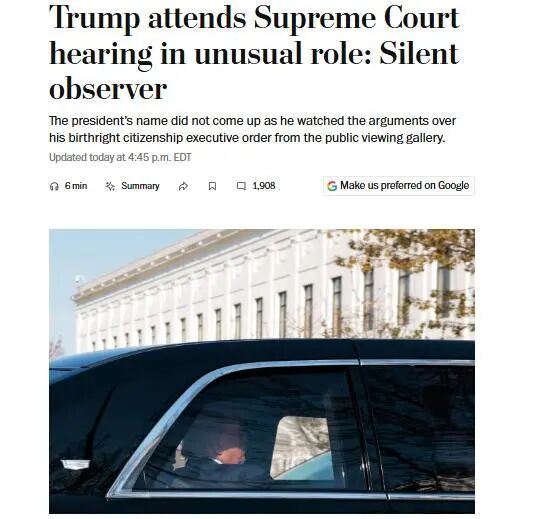
On April 1 local time, the U.S. Supreme Court held oral arguments on the Trump administration's executive order restricting birthright citizenship. Trump himself attended the hearing, becoming the first sitting president in U.S. history to attend Supreme Court oral arguments. The Supreme Court is expected to issue a final ruling by the end of June or early July this year.
On the surface, this is a legal dispute centered around the 14th Amendment to the U.S. Constitution, which was established in 1868: “All persons born or naturalized in the United States, and subject to the jurisdiction thereof, are citizens of the United States”; but for Chinese families, the real issue worth paying attention to in this case is not whether Trump will win this time, but that it has once again revealed a growingly realistic question: Is betting the family's future on “anchor babies” still a stable option?
“Anchor Baby” Reality Check
1. The child is American, how can parents legally accompany them?
This is the most awkward reality. The child is a U.S. citizen, but this does not mean that parents can automatically obtain a green card or long-term residency. When the child is underage, parents who wish to accompany their child for schooling and living in the U.S. often face an identity vacuum.
Misconception: Thinking you can use a B1/B2 tourist visa for frequent travel and long-term “stay for study accompaniment”
Reality: As immigration scrutiny tightens, holding a tourist visa for long-term residence or frequent entry and exit is highly likely to be judged as having “immigration intent,” facing deportation risks.
2. Policy uncertainty: What risks do anchor baby families face?
The core target of Trump's executive order is precisely aimed at “temporary visa” and “illegal stay” groups.
Risk: If the executive order takes effect, children born in the U.S. to parents holding H-1B, F-1, or B-2 visas may no longer automatically acquire citizenship. More seriously, parents may face visa (revocation) or entry denial due to being deemed as having “immigration intent.”
Consequence: Children may face the awkward situation of being “stateless,” or families may be forced to separate. In this period of uncertainty, any sense of luck could lead to the collapse of family planning.
EB-5: The Identity “Ballast” to Weather Cycles
Trump's angry tweet after the hearing—“The U.S. is the only country stupid enough to allow birthright citizenship!”, indicates he will not easily give up this fight. Regardless of the final ruling, the trend of tightening U.S. immigration policies is already set.
For Chinese families, what is needed is not just a child's birth certificate, but a legal identity that ensures the entire family can enjoy rights and develop freely. In this battle to safeguard identity, EB-5 is not just a green card but a “Noah's Ark” for high-net-worth families to counter policy risks and lock in future certainty. Especially with the passage of the “EB-5 Reform and Integrity Act” in 2022, it has opened a precious “window of opportunity” for current applicants.
Why is now the right time to plan for EB-5?
1. Visa allocation, no backlog benefits
The new law reserves visa slots for specific project categories, currently in a “no backlog” state. This means applicants can obtain green cards faster without waiting for years as in the past. Among them, rural area projects are allocated 20% of the annual visa quota and enjoy priority review.
2. “Dual filing” brings identity freedom
For applicants within the U.S. (such as those holding F-1 or H-1B visas), this is the biggest benefit. When visa numbers are current, applicants can simultaneously file I-526E (immigration application) and I-485 (adjustment of status application).
While waiting for the green card, they can obtain “work permits” and “re-entry permits” in advance. This means they are no longer restricted by a single visa and can freely choose to work, start a business, or even travel in and out of the U.S., saying goodbye to “identity anxiety.”
3. Grandfather Clause protection
Immigration policies are ever-changing, but the “Grandfather Clause” is the last line of defense (expires September 30, 2026). Once you submit your I-526E application, you lock in the current policy benefits. Even if future policies tighten, investment amounts increase, or backlogs worsen, your application process will remain unaffected.
Don't let your child's future
become a bargaining chip in policy games
As the “anchor baby” halo fades, what truly transcends policy cycles and supports long-term family planning is often not emotional imagination but a path actively controlled by parents. Through EB-5, the family's planning autonomy is firmly in their own hands, no longer subject to the changing winds of external political trends. What it secures for the child is a future unaffected by policy games and filled with certainty.