Emergency Alert! Earthquake-Level Proposal on U.S. Immigration
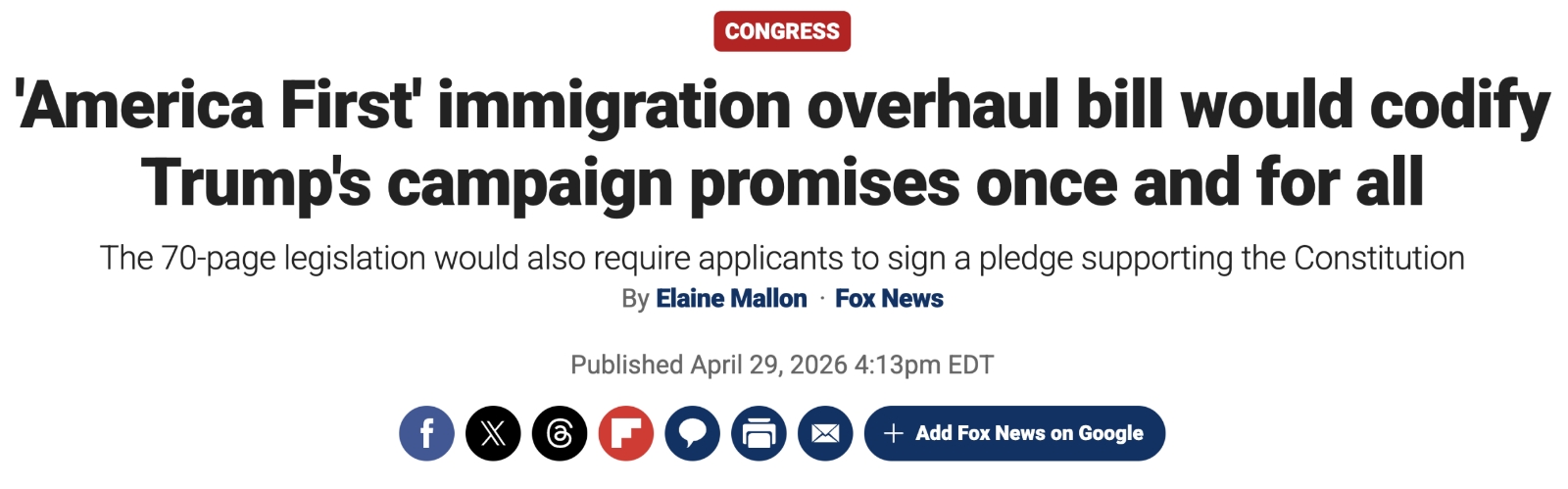
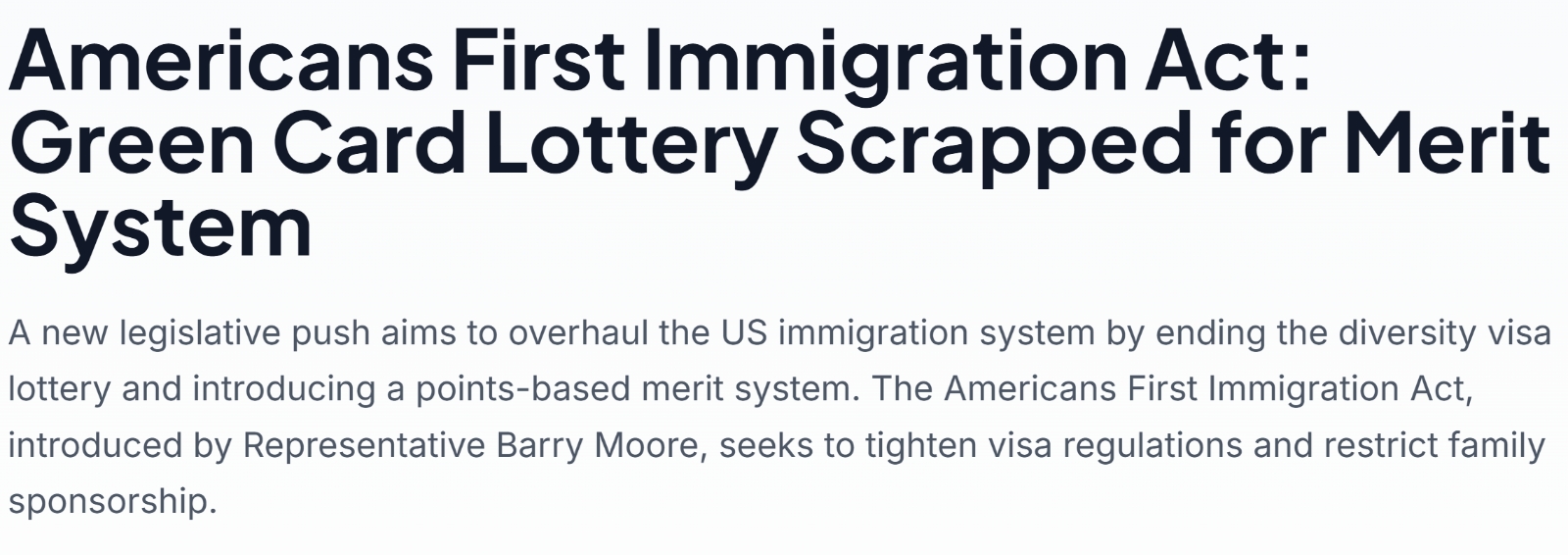
Recently, U.S. immigration policy has once again sent strong signals of tightening. Republican Congressman Barry Moore's proposal, the "Americans First Immigration Act" is drawing attention.
This 70-page proposal has gained support from several Republicans and is currently in the preliminary discussion stage in the House of Representatives. The core of the proposal is to significantly restrict family-based immigration, eliminate the green card lottery, and introduce a new points-based system. If passed, it could become one of the most significant adjustments to the U.S. legal immigration system in years.
Low-barrier opportunities may be closed
The proposal plans to eliminate the Diversity Visa Lottery program, which offers approximately 55,000 slots annually, commonly known as the "green card lottery."
This program has been regarded by many applicants as a low-barrier opportunity to obtain a U.S. green card, as it does not rely on employer sponsorship, family relationships, or high investment but rather offers immigration opportunities through a random lottery.
However, the proposal's proponents argue that the lottery mechanism is highly random and cannot effectively select talents that meet U.S. economic development and security needs. If this category is eliminated, the path to obtaining a U.S. green card through "luck" will be closed, and future applicants will need to rely more on personal abilities, employment value, or other clear paths for planning.
Regarding family-based immigration, the proposal plans to significantly tighten family sponsorship qualifications, focusing immigration slots more on the "core family" range.
In other words, in the future, only U.S. citizens and green card holders may retain the ability to sponsor immigration for spouses and minor children. The pathways for U.S. citizens to sponsor green cards for parents, adult children, and siblings may be eliminated or significantly restricted. Supporters argue that the current family-based immigration system burdens the U.S. welfare system.
Immigration screening will focus more on "hard skills"
In addition to tightening family-based immigration and eliminating the green card lottery, the proposal also suggests introducing a new points-based immigration system.
The points-based system will score applicants based on factors such as English proficiency, educational background, salary level, age, work experience, and military service. In other words, future U.S. immigration may place greater emphasis on whether applicants possess strong educational backgrounds, professional skills, language abilities, and economic contribution capabilities.
Among these, salary levels and employer recruitment compliance may also become important thresholds. Applicants will not only need to demonstrate strong competitiveness but employers may also need to prove that they have prioritized hiring domestic U.S. labor. For applicants relying on work visas and employer sponsorship pathways, future uncertainties may increase further.
4. The tighter the policy, the earlier the identity planning
Currently, the "Americans First Immigration Act" is still just a proposal, and there is uncertainty about its actual implementation. World Trade Connect will continue to monitor the progress of the bill and share updates with everyone as soon as new information becomes available.
However, the policy signals it sends are still worth noting: the U.S. immigration system is transitioning from a previously diverse range of options to a new stage that emphasizes screening, compliance, and long-term contributions.
This means that for individuals with needs related to studying, working, living, asset allocation, or long-term family planning in the U.S., identity planning should consider potential future policy changes and uncertainties earlier. A truly prudent approach is to evaluate family structure, children's ages, financial arrangements, U.S. identity status, and future development goals as early as possible to choose identity paths that better match individual conditions and offer greater certainty.
In such a policy environment, EB-5 investment immigration becomes increasingly valuable. The significance of EB-5 is not just obtaining a green card but also addressing the uncertainty of children's future study, internship, work, and long-term development in the U.S. For families with needs related to living, education, career planning, and asset allocation in the U.S., EB-5 can serve as a more forward-looking long-term identity arrangement.
EB-5 immigration application conditions are flexible, with no strict requirements for age, education, language, business, or work experience. Especially under the new EB-5 law, rural EB-5 projects are exempt from backlog and have priority approval advantages. Additionally, the "dual filing" policy allows applicants to simultaneously submit I-526E and I-485 in the U.S., obtaining a Combo Card in approximately three months, quickly achieving legal residence and employment eligibility.