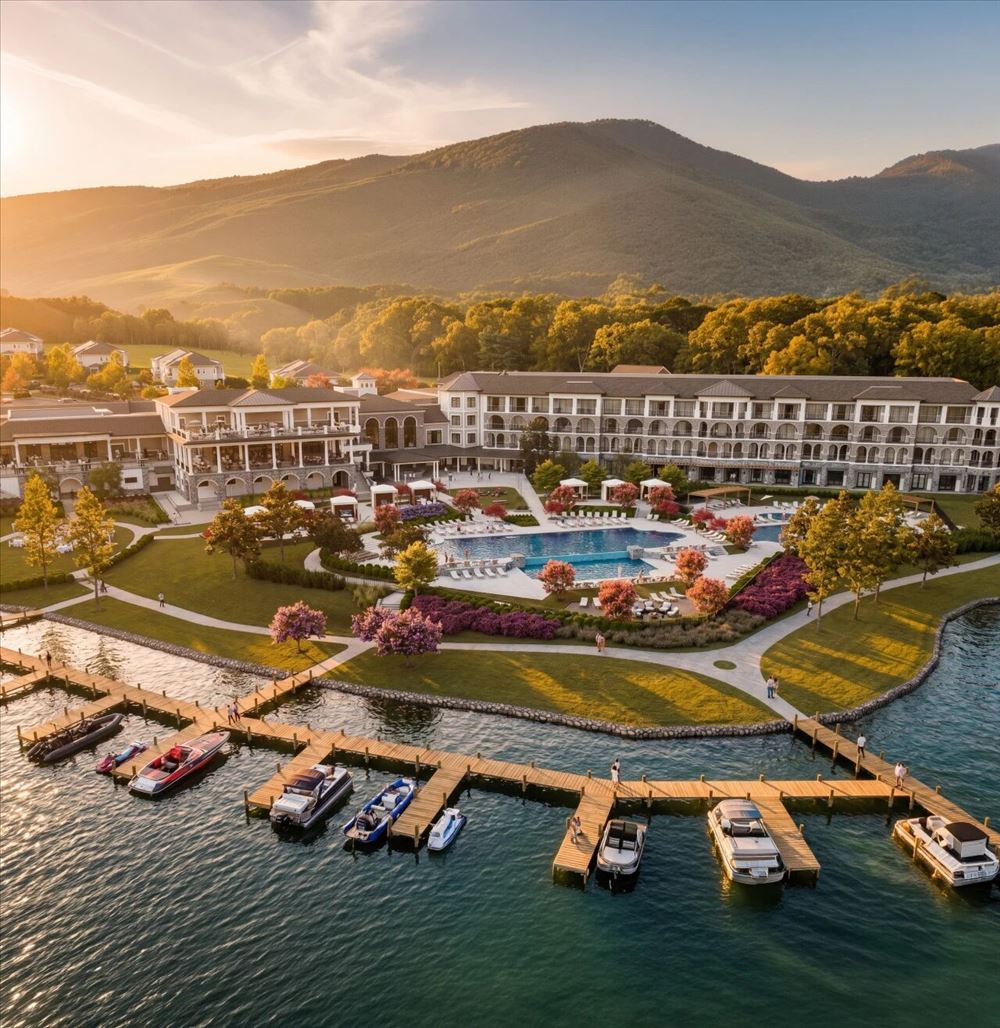
Over 90 Years of Legendary Events, This EB-5 Project is Booming!
Every April, the state of Georgia in the United States enters a special time of the year.
Private jets begin to arrive in Georgia in large numbers. Hotel bookings soar. Corporate events increase significantly.
High-end restaurants, business banquets, and short-term rentals enter their busiest period of the year.
All of this is not due to a holiday but because of the—Augusta Masters.
Founded in 1934, the Masters is one of the four major golf tournaments in the world and the only one held at a fixed course. With over 90 years of history, it has not only become an important hall of fame for golf but also evolved into a significant symbol of global elite social culture. The long-standing membership invitation system and business social attributes of the tournament further enhance its unique circle influence—membership is by private invitation only, limited to invitees, and long-term members include elites from business, politics, and sports.
What truly attracts global attention is not just the champions but the people gathered behind the championship. And the way these people stay is redefining the value map of the entire region.

Beyond the Tournament
What the Masters Truly Creates
Unlike most major events, the influence of the Masters does not quickly fade after the tournament ends.
Public research shows that the Masters generates over $100 million in economic contributions to the region annually and creates thousands of temporary jobs, impacting industries such as tourism, dining, accommodation, transportation, retail, and services.
During the tournament, a large number of corporate receptions, brand events, private dinners, media exchanges, and business networking occur alongside the official competition.
Those who come here each year are not just golf spectators. They include Fortune 500 clients, financial institutions, private equity firms, brand partners, high-net-worth families, and international visitors.
Meanwhile, private aviation traffic during the tournament consistently ranks among the highest in the U.S., creating a highly concentrated flow of high-net-worth individuals, earning it the nickname "Super Bowl of Private Aviation" by the media.
This long-term, stable, and high-quality flow of people has made the Masters one of the few large-scale events in the southeastern United States with sustainable spillover effects.
Demand for High-End Accommodation
Extending Beyond the Tournament Core Area
When an event consistently gathers the same type of people, changes often first occur in accommodation.
During the Masters, local accommodation resources are perpetually in short supply. High-quality hotels are often booked months in advance, and some high-end short-term rental homes command weekly rents exceeding $50,000.
But what truly deserves attention is not the price but the way high-net-worth individuals are changing their stay patterns.
They want: to avoid returning to crowded urban areas after watching the games; to have quiet spaces for socializing after business events; to enjoy complete living scenarios when traveling with family; and to still feel like they are on vacation even after staying for a few days.
Thus, the Masters has gradually revealed a clear trend:
The tournament is in Augusta.
Life begins to extend outward.
And Lake Oconee happens to be on this extension path.
Lake Oconee: A Rare High-End Lakeside Living Destination in the Southeastern U.S.
If the Masters creates attention, Lake Oconee meets long-term needs.
With over 19,000 acres of water and approximately 374 miles of shoreline, Lake Oconee is not a new area emerging because of the tournament. For a long time, it has become one of the most representative lakeside vacation destinations in the southeastern U.S., thanks to its lakeside environment, recreational resources, and relatively independent lifestyle.
In public discussions, many long-time participants of the Masters mention that they arrange their accommodations in the Lake Oconee area—attending the tournament during the day, returning to the lakeside to rest at night, combining watching the games, socializing, and vacationing into a complete experience.
Why "Marriott Lake Villas Resort" is Entering the Long-Term Value Track
Truly premium assets are not just about having a view but about having an irreplaceable location and access to clientele.
Exclusively represented in Greater China by Worldway Group and jointly developed with the U.S. billion-dollar Peachtree Group, the "Marriott Lake Villas Resort" EB-5 project is located on the core lakeside area of the western shore of Lake Oconee in Georgia.
The project plans to create a high-end lakeside resort complex integrating Marriott-branded luxury hotels, residential properties, lake-view pools, full-service spas, conference and banquet facilities, dining and bars, and marina berths, forming a complete ecosystem of living, vacationing, business, and socializing. It caters not only to the short-term accommodation needs released during the tournament but also to the year-round demand for high-end consumption and vacationing.
What’s more noteworthy than the project itself is its entry threshold.
The project has undergone years of preparation from initial planning to obtaining core construction permits. It has now completed all legal permits required for hotel construction, site leveling work has been completed, and the project has officially entered the main construction phase.
According to the project developers, commercial land approvals in the Lake Oconee area have long maintained strict standards, and the complete development process often requires a lengthy cycle. Particularly, premium land resources suitable for large-scale waterfront resort complexes are limited. Currently, there are fewer than three plots in the Lake Oconee area that meet development conditions, and obtaining development qualifications and achieving implementation is no easy task. In the future, there will essentially be no new waterfront resort hotel projects in the Lake Oconee area.
For this reason, the value of the "Marriott Lake Villas Resort" lies not only in occupying lakeside resources but also in entering the region’s long-term development window with mature planning capabilities, an international brand system, and complete development conditions.
The project is currently expected to be completed and open in the first quarter of 2028. By then, it will present not just a lakeside resort complex but a new lifestyle scenario built around long-term stays, quality living, and high-end social needs.
For families interested in U.S. immigration planning, global asset allocation, and long-term value investment, this is not just a project opportunity but a window to participate in the region’s long-term development trends.