Can this type of U.S. visa 'jump the queue' by paying? Inside story revealed
Recently, the U.S. Department of State officially announced a new visa pilot policy: From July 1, 2026, to December 31, 2026, applicants for U.S. business and tourist visas (B1/B2) can pay an additional fee of $750 to gain faster access to visa interview appointments.
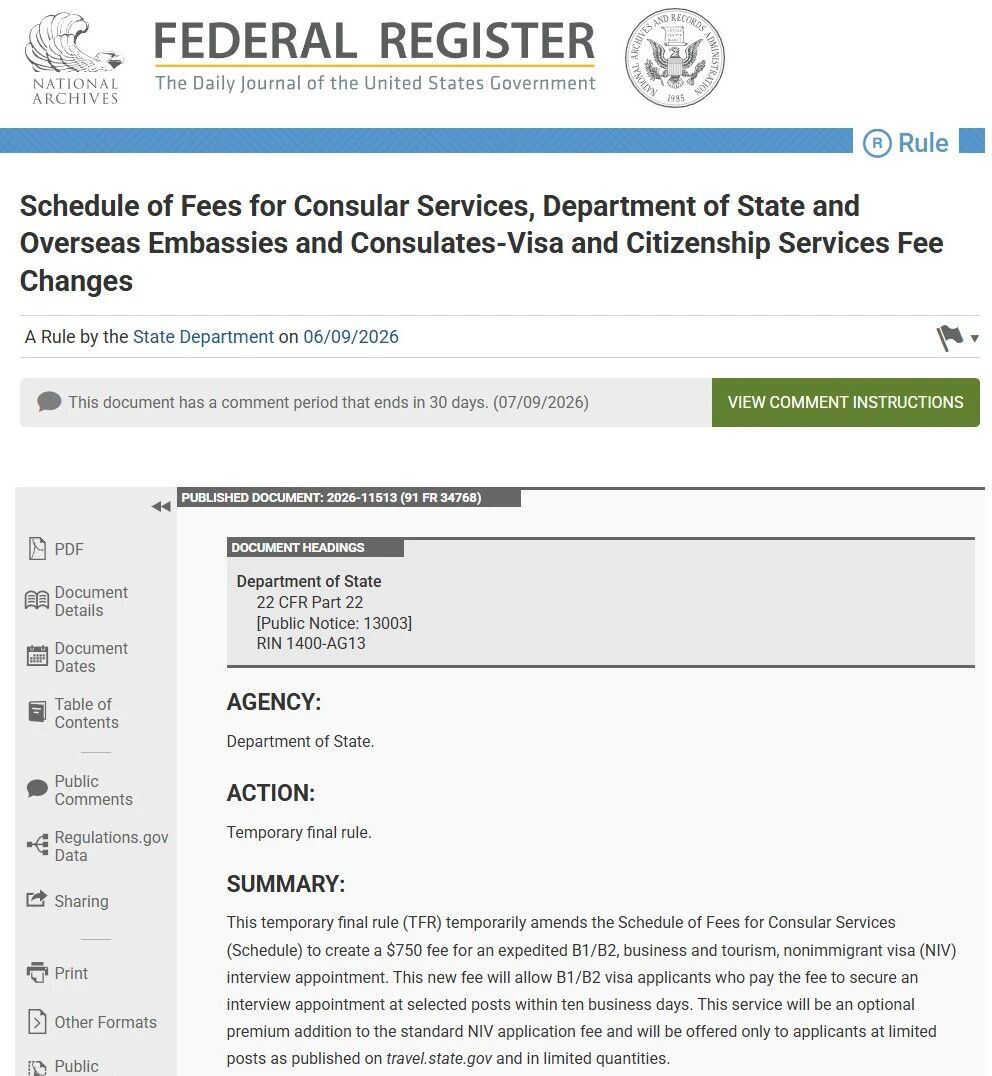
Pay an additional $750
It speeds up the appointment, not the approval
According to the currently announced rules:
• The regular B1/B2 visa application fee remains $185;
• Applicants can pay an additional $750 expedited fee;
• After successful payment, an interview appointment can be obtained within 10 business days (subject to participating pilot consulates);
• Visa approval is not guaranteed;
• Subsequent administrative processing time is not shortened;
• If the visa is denied, the expedited fee is non-refundable;
• The pilot period is from July 1, 2026, to December 31, 2026; whether it will be implemented long-term after the pilot depends on the operational results.
In other words:
Paying an additional $750 expedited fee does not guarantee a visa result but provides an opportunity to enter the interview appointment process faster.
Visa review standards, background checks, security screenings, and subsequent procedures will still be carried out according to current rules.
Why introduce this service now?
In recent years, U.S. visa backlogs have persisted, with appointment wait times in some regions remaining high. The U.S. Department of State has publicly stated its intention to use a fee-based mechanism to provide more flexible solutions for the World Cup, Olympics, and urgent business travel needs.
It should be noted that the currently announced policy is still a pilot project. The list of specific countries and consulates participating in the pilot has not yet been officially announced.
For Chinese applicants, whether the U.S. Embassy in Beijing and the consulates in Shanghai, Guangzhou, Shenyang, etc., in mainland China will be included in the first batch of pilots remains to be officially confirmed.
Worldway will continue to monitor relevant developments and provide timely updates.
From visa convenience to long-term identity planning
For those with short-term travel needs to the U.S., this policy offers a new option. If there are urgent business arrangements or temporary travel plans, there may indeed be more flexibility in appointments in the future.
However, it is also important to note:
This adjustment addresses the efficiency of appointments, not identity issues.
Tourist visas are still non-immigrant visas, with the core purpose being short-term stays.
Visa appointments can be expedited, but visa duration, entry rules, and subsequent identity arrangements will not change due to expedited services.
For many families, the need to travel to the U.S. has long gone beyond a single trip.
More and more families are beginning to consider:
How to plan their children's future education paths;
Whether more flexible international mobility is needed;
How to mitigate uncertainties brought by identity changes;
How to reserve space for future work, asset allocation, and family planning.
In this context, planning a long-term identity path in advance is becoming a topic of increasing interest for many families.
Seizing policy windows requires early planning
In the past, many families were accustomed to first entering the U.S. with tourist or student visas and then considering long-term identity options based on their circumstances.
However, in recent years, with changes in visa appointments, identity conversions, and employment environments, many families have started planning their identities earlier.
Among these, the new EB-5 investment immigration policy is becoming one of the compliant paths receiving sustained attention.
For eligible applicants, EB-5 focuses not on a single trip to the U.S. but on long-term identity arrangements.
Planning a long-term identity in advance can help families achieve greater certainty in education, residence, lifestyle arrangements, and future development choices.
It is worth noting that the EB-5 new policy's phased window will not exist indefinitely. As application volumes grow, reserved visa quotas may gradually be consumed, and there may be a possibility of entering a waiting period in the future; meanwhile, the grandfather clause will expire on September 30, and the minimum investment amount is expected to increase on January 1, 2027.
For families planning U.S. identities, it may not be necessary to decide immediately, but it is worth understanding policy changes early, evaluating timelines, and reserving more initiative for future planning.