Breaking! Trump Administration Allocates $70 Billion to Immigration Enforcement
Recently, U.S. President Donald Trump officially signed the "Secure America Act," providing approximately $70 billion in new funding for the U.S. immigration and border enforcement system, with the budget locked in until the 2029 fiscal year.
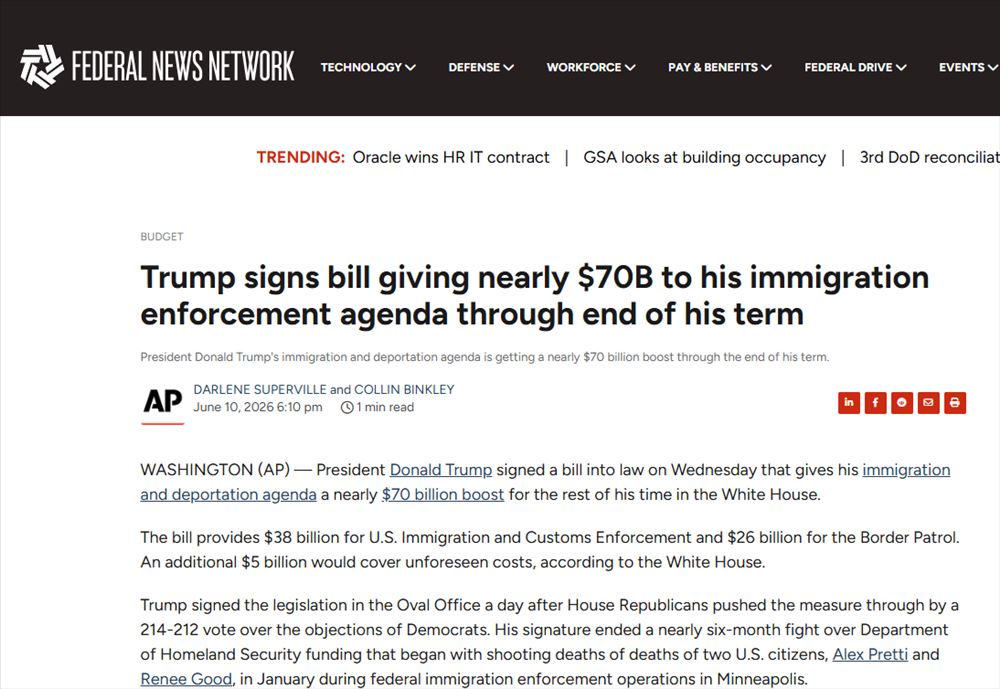
This is one of the largest immigration enforcement appropriations in the United States in recent years.
For many families concerned about traveling to the U.S., studying abroad, identity planning, and long-term immigration pathways, the passage of this act does not mean immediate changes to U.S. immigration laws, but the signal it sends is noteworthy——in the coming years, changes in the U.S. immigration environment may stem more from “enhanced enforcement capabilities.”
1. What are the main areas of the $70 billion allocation?
According to public information, the funds will primarily be allocated to three areas:
• Approximately $38 billion for ICE (U.S. Immigration and Customs Enforcement);
• Approximately $26 billion for CBP (U.S. Customs and Border Protection);
• Approximately $5 billion for projects and expenditures related to the Department of Homeland Security.
From the perspective of usage, the funds are likely to support the following key areas in the coming years:
First, increasing the number of enforcement personnel: including recruiting more officers, expanding training programs, and enhancing case handling capabilities.
Second, expanding detention and deportation systems: including increasing detention capacity, upgrading related facilities, and improving execution efficiency.
Third, strengthening border management capabilities: including border patrol, identity verification, and information management system upgrades.
Fourth, enhancing nationwide collaborative enforcement capabilities: improving the overall efficiency of the immigration management system through technological and resource investments.
Since budget execution, personnel recruitment, and infrastructure construction take time, the enactment of the act does not mean immediate significant changes in the short term. The actual impact is expected to unfold gradually.
2. What changes might occur in the U.S. immigration environment in the coming years?
With long-term funding support for the enforcement system, the U.S. immigration environment may exhibit several trends in the coming years.
First, identity reviews may become more detailed.
Whether it is visa applications, extensions, status changes, or green card applications, requirements for document review, background checks, and information consistency may be further tightened.
Second, identity management may place greater emphasis on continuity.
Applicants' travel records, historical status, and consistency between documents may become more critical review factors.
Third, enforcement efficiency may improve.
With expanded personnel and facilities, case processing, detention management, and execution efficiency may become faster than before.
Fourth, enforcement environments may further diverge between different regions.
In the future, some states and cities may strengthen local collaboration, leading to differences in identity management experiences.
It is important to emphasize that these changes are more about enhanced enforcement capabilities and do not represent significant adjustments to immigration policies themselves.
3. What does this mean for international students, visa holders, and immigration applicants?
For most legitimate applicants, there is no need for excessive concern. Normal study, lawful work, and compliance with requirements for extensions or status applications typically will not automatically make one a target of enforcement due to increased enforcement budgets.
However, in the coming years, one trend may become increasingly evident: identity management will place greater emphasis on long-term compliance.
Ultimately, this $70 billion investment does not change U.S. immigration laws but may enhance the enforcement capabilities of the U.S. immigration system in the coming years.
While policies remain important, in an environment of continuously enhanced enforcement capabilities, the importance of long-term compliance and proactive planning may become increasingly prominent.
4. EB-5 Gains Attention Amid Long-term Compliance Trends
If changes in the U.S. immigration environment in the coming years are more about enhanced enforcement capabilities, then for many families, the question to consider is "how to establish a more stable and sustainable identity arrangement."
From existing policies, the U.S. EB-5 investment immigration program is one of the most highly regarded long-term identity pathways.
First, EB-5 has extremely strict requirements regarding the source of funds. Second, EB-5 adopts a phased review mechanism, with the U.S. Citizenship and Immigration Services continuously reviewing investment compliance and project execution. Furthermore, the EB-5 program itself has been in operation for over 30 years, with a highly mature legal framework and operational pathway, emphasizing genuine investment and long-term compliance.
5. The Current Window Remains, but Time is of the Essence
Currently, the EB-5 program under the new law remains in a relatively favorable policy window. For example, rural EB-5 projects currently enjoy no waiting periods and have priority processing advantages; at the same time, the "dual filing" policy allows eligible applicants to simultaneously file I-526E and I-485 within the U.S., quickly obtaining a Combo Card to secure legal residency, work authorization, and travel convenience as soon as possible.
However, this window will not remain open indefinitely. As reserved visa quotas continue to be consumed, waiting period pressures are gradually emerging; meanwhile, grandfathering provisions will expire on September 30; on January 1, 2027, the minimum investment amount may rise from the current $800,000 to $900,000–$937,500 or even higher.
For families with clear plans for U.S. education, long-term residency, or global asset allocation needs, completing evaluations and planning earlier often makes it easier to lock in the current relatively clear policy conditions.