Quick Read for Studying in the US! Major Changes Proposed for US J-1 Visas
The U.S. J-1 Exchange Visitor Program is set to undergo a round of systematic adjustments.
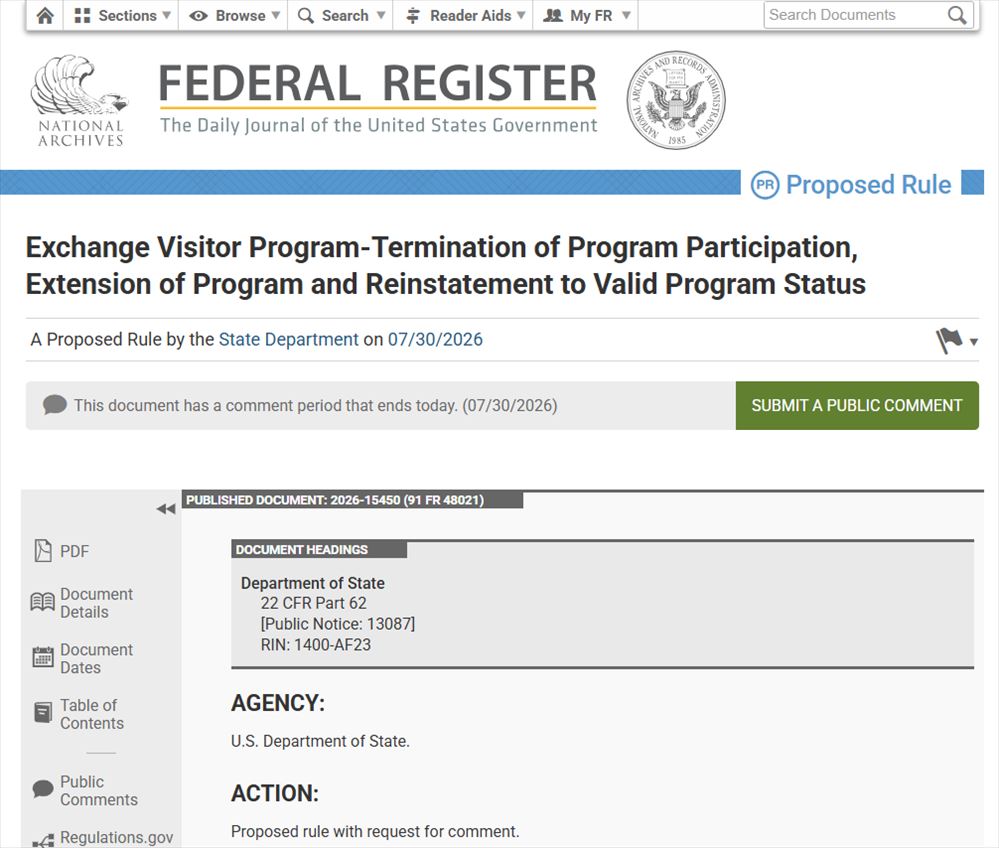
Recently, the U.S. Department of State officially published a draft of new regulations for the J-1 Exchange Visitor Program in the Federal Register. The draft plans to re-regulate program termination, extension, SEVIS record correction, and status reinstatement procedures, further unifying the management standards for various types of exchange visitors.
Proposed Adjustments to Au Pair Extension Rules
Under current regulations, au pairs have separate extension provisions, allowing them to apply for an extension of 6, 9, or 12 months after the end of their initial program cycle. Applications must be submitted no later than 30 days before the program ends.
The new rule proposes to eliminate this separate provision, integrating au pair extensions into the unified J-1 extension procedure. The corresponding application timeline will be adjusted from 30 days in advance to 90 days in advance.
The original extension options of 6, 9, and 12 months will remain, but applicants will need to verify whether the au pair has completed the required educational coursework. Failure to complete the coursework or provide valid proof may affect the extension outcome.
New Objection Procedure for Program Termination
The proposed rule introduces an appeal procedure for certain program termination decisions for the first time. If the U.S. Department of State intends to terminate a J-1 program on the grounds of “unauthorized employment” or “false information and documentation,” the applicant may submit explanations and supporting materials within 10 business days.
However, the scope of this procedure is limited. Applicants cannot use financial hardship, family impact, or other equity factors as grounds for appeal. Once the Department of State makes a final decision, no further administrative appeal will be available.
If the termination is due to the immediate revocation or cancellation of the visa by the U.S. Department of State or the Department of Homeland Security, the aforementioned appeal procedure does not apply.
SEVIS Record Corrections Should Be Processed Within 30 Days
The new rule will also further standardize the SEVIS record correction procedure.
If a J-1 individual's SEVIS status becomes abnormal due to administrative oversight, system operational errors, or failure to update information in a timely manner, the sponsor organization must complete the correction within 30 days after the status change.
After 30 days, it generally can no longer be resolved through a simple system correction and will require a formal application for program status reinstatement.
Once the sponsor initiates the reinstatement application, they must also submit an explanation letter, proof of payment, I-94, visa, passport, and other relevant materials within the specified timeframe.
This means that once an abnormal SEVIS status is detected, the applicant should contact the sponsor immediately to avoid increasing the difficulty of status reinstatement due to delayed processing.
Currently Still a Draft, but the Trend of Tightening Regulation is Clear
It should be noted that the rules published by the U.S. Department of State this time are currently still in the draft stage and have not been officially implemented. They still need to undergo a public comment period and subsequent review. The public comment period begins on July 30, 2026, and will last for 60 days.
However, from the advancement of extension timelines and the increase in termination scenarios to the strengthening of dynamic SEVIS regulation, the direction of U.S. J-1 status management is very clear: more complex procedures, stricter reviews, and a further reduced margin for error in maintaining status.
Stricter Regulation of Temporary Status Highlights the Need for Early Long-Term Planning
J-1 is a temporary status tied to a specific exchange program.
Once the program ends, an extension is missed, work exceeds authorization, or an issue arises with the SEVIS record, the applicant's study, work, and living arrangements in the U.S. could all be affected.
For those who only plan to participate in exchange programs in the short term, strictly complying with program requirements, checking status records in a timely manner, and preparing extension materials in advance are key to maintaining legal status.
But for families wishing to study, work, and live in the U.S. long-term, relying solely on temporary statuses such as J-1, F-1, OPT, or H-1B still means facing uncertainties brought by schools, programs, employers, and policy changes.
In contrast, EB-5 investment immigration does not rely on academic degrees, majors, or employer sponsorship. Currently, rural EB-5 projects offer the advantages of no visa backlog and priority processing. The "concurrent filing" policy allows applicants who are legally in the U.S. with no backlog to file Form I-526E and Form I-485 simultaneously, while applying for work authorization and travel documents.
Against the backdrop of continuously refined regulation of temporary status, families planning to go to the U.S. should evaluate long-term status pathways as early as possible to retain more initiative for their future education, career, and family life.
The $800,000 Window Enters a Critical Stage
It is worth noting that the current EB-5 policy dividends will not last forever. On January 1, 2027, the minimum EB-5 investment amount will increase from $800,000 to $900,000–$950,000 or even higher, and the grandfathering clause will expire on September 30.
This means that families with clear long-term plans to stay in the U.S. must not only pay attention to changes in temporary status policies but also evaluate the EB-5 application pathway as early as possible, taking into account financial arrangements, family member situations, and travel plans to the U.S.