Both Houses of Congress Shift Control: What Are the Variables for US Immigration Policy?
In the US midterm elections held on November 3, 2026, local time, the Democratic Party successfully regained control of Congress. According to data from the website of Decision Desk HQ (DDHQ), a US election data analysis organization, the Democrats are expected to win 53 seats out of the 100 seats in the Senate, regaining control of the Senate; at the same time, they will regain control of the House of Representatives with 225 seats, ending their four-year minority status.
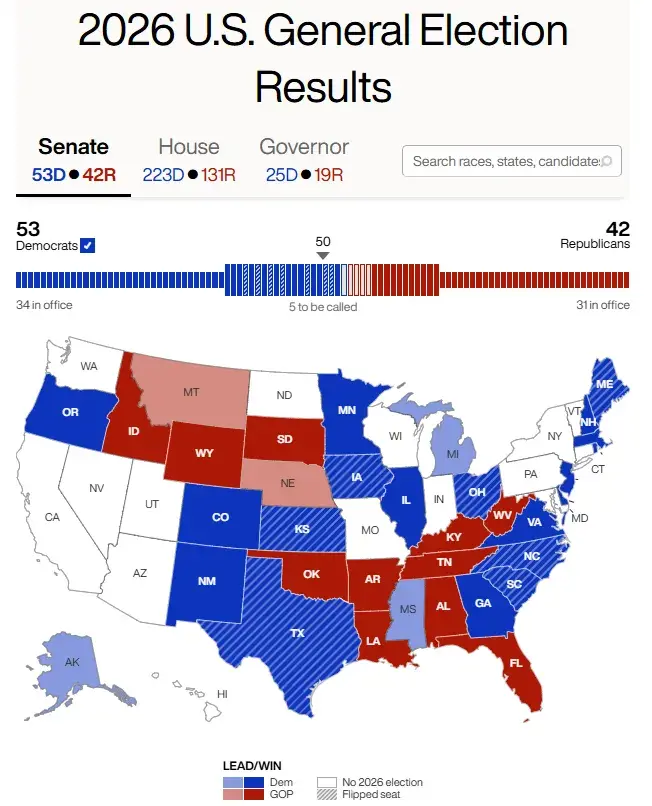
The shift in control of both houses of Congress will not only affect the direction of US domestic and foreign policies, but also introduce new variables to the legislative pace and bill negotiation logic in the immigration field, directly affecting the plans of countless Chinese families to study in or move to the US.
For families planning to study in the US, or those already studying and working in the US, the shift in policy direction means that status planning can no longer be a passive wait; proactive planning has become a compulsory course.
I. Congressional Landscape Rewritten
Increased Uncertainty in US Immigration Policy
With the Democrats controlling both the Senate and the House, the leadership of various congressional committees will undergo a reshuffle. As the core reviewing body for immigration bills, the Judiciary Committee will see its agenda and legislative priorities adjusted accordingly.
The current EB-5 Regional Center Program is set to expire on September 30, 2027. According to past practice, program extensions often rely on "riding along" with the federal budget bill. Now, with the shift in the political landscape of both houses, budget negotiations will intensify, leaving the direction of the EB-5 extension, additional clauses, investment thresholds, and quota rules up in the air, with multiple possibilities for future policy adjustments.
Meanwhile, the dilemmas of traditional paths to staying in the US remain unresolved:
▍H-1B Work Visa
The lottery selection rate continues to decline, and it is highly dependent on employers. Once unemployed, one's legal status immediately flashes a red light. The proposed fee increase of $103,265 for H-1B has also concluded its public comment period; once implemented, employer sponsorship willingness and the lottery landscape will be completely reshaped.
▍OPT / Student Visa
Policies are frequently disrupted by proposed bills, making "facing a status crisis upon graduation" a major pain point for many international student families. The OPT fee proposal, which suggests schools pay $70,000 for each student's first year and $30,000 for subsequent years, will close its public comment period on November 9, 2026.
▍Employment-Based Immigration Backlog
The priority dates move slowly, and the waiting period often spans several years, a time cost that many cannot afford.
Many families assume they can just "take it one step at a time" to stay in the US, but US immigration policy is heavily influenced by partisan politics. Once policies tighten, starting to plan then will likely mean missing the window of opportunity. In these volatile times, relying on lotteries, employers, or policy luck to secure status carries increasingly high risks.
II. Under the Changing Landscape
EB-5 Becomes the Preferred Option for US Residency Status
01 Concurrent Filing Window Remains Open, Offering "Quasi-Green Card" Benefits
In the November 2026 Visa Bulletin, the EB-5 reserved categories (Set-Aside) for applicants born in mainland China still show as "Current" (no backlog). Applicants who are physically in the US and meet the requirements for adjustment of status can concurrently file Form I-526E and Form I-485:
· Apply for an Employment Authorization Document (EAD) to work freely, without being tied to an employer or the H-1B lottery;
· Apply for Advance Parole (AP) to travel freely in and out of the US.
Once a backlog occurs in the reserved categories, the concurrent filing window will close. By then, it will be too late to quickly resolve legal status in the US. The "Current" status will not last forever; seizing the present moment is key.
02 Clear Timeline for EB-5 Price Increase: Delaying Action = Spending More Money
According to the automatic inflation adjustment mechanism of the EB-5 Reform and Integrity Act (RIA), starting January 1, 2027, the minimum investment threshold for EB-5 Targeted Employment Areas (TEAs) is expected to rise from the current $800,000 to $900,000. The final amount is subject to official publication in the Federal Register by USCIS.
The signal from the policy level is already very clear: the earlier you file, the lower the cost and the more choices you have.
03 Year-End Funding Negotiations May Be a Key Watchpoint for Extension
US temporary funding regulations dictate that federal temporary funding will last until December 11, 2026, at the latest. In these year-end funding negotiations occurring before the new Congress takes office, the industry is watching closely to see if the EB-5 Regional Center extension provisions will be included in a larger spending bill. Every adjustment in the policy environment serves as a reminder to applicants: plan early, do not wait for uncertainties.
III. Policies Are Changing
Seize the Window of Opportunity and Plan Your US Status Early
With the Democrats taking both the Senate and the House, the congressional landscape has changed, and the game of immigration legislation has just begun. Every timeline for OPT, H-1B, and EB-5 could be rewritten. The best response to the future is to complete your status planning before the changes arrive.
We have seen too many families wait until their children are close to graduation or their visas are about to expire to hurriedly start status planning, only to encounter retrogression/backlogs, rising costs, or policy changes, and miss out on opportunities. US policy is heavily influenced by party politics, and uncertainties always exist. Status planning is never something that should be left to the last minute.
Instead of waiting for policy changes and reacting passively, it is better to proactively seize the current window of opportunity and use EB-5 to secure a certain US status for yourself and your family.