2026 US College Early Admission: Revealing the 'Privileges' Behind Identity

2026 Fall US undergraduate first wave early admission results have been gradually released. Based on the currently released data, one trend is increasingly clear—the competitive heat at prestigious universities has not diminished.
Amidst growing number of applicants and highly stable admissions, the 'breakthrough difficulty' in the early admission track has risen again. This round of announcements is not just about the results but feels like a reality check for all applicant families. Why do similar conditions yield vastly different outcomes?
Quick Overview of Top 30 US College Early Admission Data
The data released so far shows that this year's early admission presents three highly consistent characteristics.
First, the admission rate remains historically low, and some schools show a downward trend.
• Massachusetts Institute of Technology (MIT): 11,883 EA applications, 665 admitted, admission rate 5.6%
• Yale University: 7,140 EA applications, 779 admitted, admission rate 10.9%
• Duke University: 6,159 early admission applications, 847 admitted, admission rate 13.8%
• Brown University: 5,406 ED applications, 890 admitted, admission rate 16.5%
These numbers indicate: early admission does not mean easier, it just has a different pool of competition.
Second, the scale of single-school admissions for mainland Chinese students remains stable and limited.
From the perspective of single schools, the scale of early admissions for mainland Chinese students in Ivy Leagues and prestigious private colleges remains in the single-digit to low double-digit levels, usually concentrated in the range of 8-13. Furthermore, admission quotas are highly concentrated in a few core cities.
The Real Issue Revealed by Early Admission Announcements
Which 'admission pool' were you placed into? After each round of early admission announcements, similar confusions appear:
• Academic scores are similar, yet some are admitted while others are rejected
• Competition, research, and resumes are not less impressive, yet stuck outside the door
Many families attribute the reason to 'luck,' but in reality, the issue often lies in a more fundamental structure.
American colleges never operate on a single admissions pool. Real-world prioritization in admissions generally follows this logic:
• Students within the US high school system
• US citizens and green card holders
• International students (F-1 status)
Under similar academic conditions, different identities correspond to completely different competitive dimensions.
This is why:
• Students who complete high school education in the US more easily enter the stable zone
• Green card holders are more easily considered as 'local students'
• International students continue to compete in the most crowded, limited pool
Identity Impact Far Beyond 'Admission Probability'
Many families underestimate the systemic impact of identity differences. Identity not only affects 'whether or not you can enter' but also determines:
• Whether the Need-blind admissions policy applies
• Whether restricted by international student quotas
• Whether eligible to apply for some programs or colleges closed to international students
• Whether considered as 'stable student source' during early admission
In the background of continued increases in local early applications and tightening international student quotas, this gap is being further enlarged.
While a green card is not a shortcut, it determines whether the child is on the correct starting line.
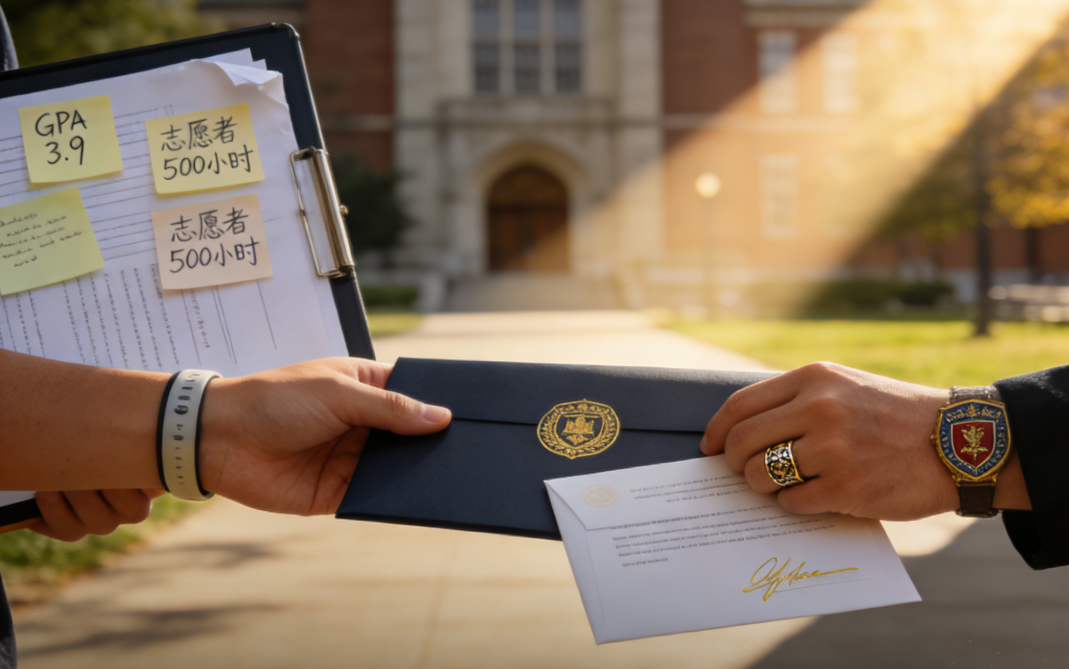

Time Factors in Identity Planning
Becoming More Crucial
For families clearly focused on long-term stays in the US, planning around children's education and overall family development, proactively planning identity is essentially a form of risk management and path optimization.
Nowadays, more families choose more stable paths—through US EB-5 investment immigration, locking long-term plannable identity advantages for their children. Once identity is secured, children can enter the local student system when applying to US colleges, making the overall path more stable; after graduation, they can directly enter the US workplace or research system, reducing uncertainties brought by identity changes.
Under the new EB-5 law framework, a relatively clear policy window period has emerged:
• Exempt from waiting: enough reserved visa slots.
• Priority review: rural projects enjoy statutory priority rights, with significantly accelerated review.
• 'Double Filing' policy: allows simultaneous submission of I-526E and I-485 applications, fastest approval in 3 months to obtain a Combo card, achieving early legal residence and work in the US.
It is important to remind that while rural EB-5 projects are currently still in a no-waiting period state, 'no-waiting period' does not mean long-term existence but represents the current pace still controllable. Once the waiting period forms, identity planning will shift from proactive configuration to passive waiting. Meanwhile, the EB-5 grandfather clause expires on September 30, 2026, and has entered a countdown phase. Missing key timing points may change future policy environment, review cycle, and uncertainties.
For families truly planning long-term US residence, striving for educational resources, proactive US identity planning is a systematic configuration of future paths. World Trade Hub holds two high-quality EB-5 rural projects to help investors achieve American identity planning steadily, no waiting period, efficiently, quickly stepping onto new American life. Limited global slots, scarce seats, first come first served!
Furthermore, the Trump Golden Card immigration project officially opens applications, and World Trade Hub has launched the Golden Card acceptance service, helping applicants efficiently advance applications and seize key timing windows.